

A conversation with Dee Daley about what the written job description misses.
One thing I appreciate about talking with people who have spent decades doing a particular kind of work is that they rarely make it sound simple.
I recently sat down with Dee Daley, WorkWell's Director of Clinical Practice. Dee has spent much of her career looking closely at how work is actually performed, often in jobs that are easy to underestimate from the outside.
We talked about what employers miss when they rely on a written job description, why small forces can create significant risk, and how experience has changed the questions she asks.
Karil: What does a written job description usually miss?
Dee: It may tell you what needs to be accomplished, but it often does not tell you what the worker physically does to accomplish it.
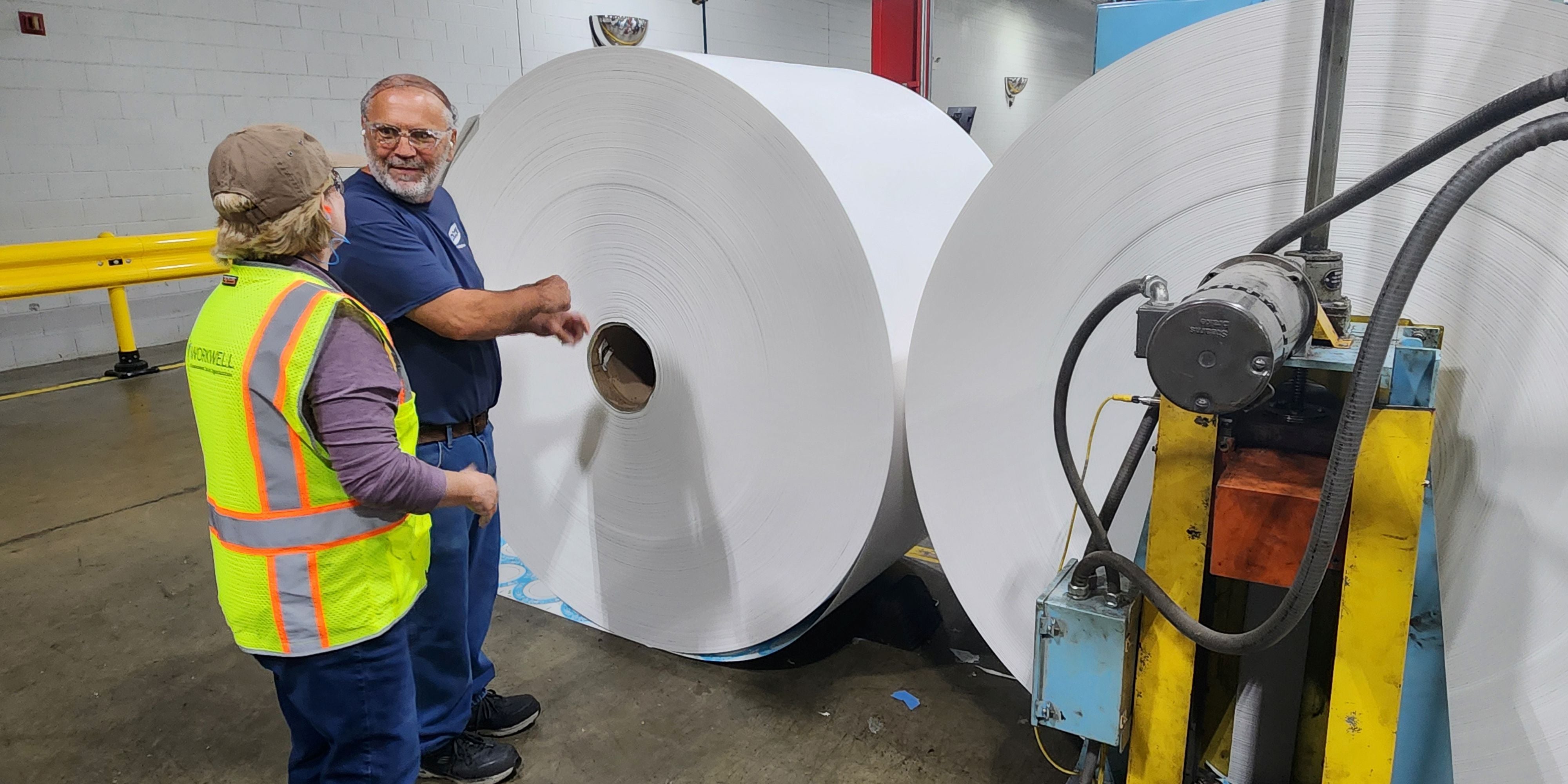
A job description might say that an employee moves a 3,000-pound roll of paper. The employee is not lifting 3,000 pounds. They are operating the hoist that moves it. The physical demands include positioning the load, reaching, gripping, walking, and responding to conditions around the task.
Even when the requirement is the same, people may perform the work differently. A 50-pound lift from the floor is not the same as moving 50 pounds from a pallet. You have to see the work and talk with the people doing it.
Karil: Was there a moment when that became especially clear to you?
Dee: Early in my career, I watched employees stamping a company name onto faucet parts. They made it look easy and encouraged me to try.
I placed the part in the machine, put my hands on the controls, pressed the buttons, and pulled it out. The finished part was supposed to show the company's full name. Mine said only "MO."
It was funny, but I never forgot it. No job is as simple as it looks when someone skilled is doing it. The people performing the work every day are the experts, and a good job analysis begins with respecting that expertise.
Karil: Where do employers most often underestimate physical demand?
Dee: Frequency and force. Five or six pounds of pinch force does not sound significant until someone handles each piece six to eight times and processes roughly 900 pieces in a shift. The body does not experience one small pinch. It experiences thousands of repetitions.
The opposite can happen too. A difficult task may have been part of an operation for so long that everyone has become used to it. Measuring the work can make a familiar problem visible again.
Karil: Why does getting the job demand right matter beyond ergonomics?
Dee: Because the same information may support hiring, post-offer employment testing, medical restrictions, accommodations, and return-to-work decisions.
If a demand is understated, the test may not reflect the job. If it is inflated, an employer may exclude qualified applicants or keep an experienced employee out of work longer than necessary. The standard needs to match the current job, not an idealized version of it and not a version that existed years ago.
Karil: Has experience changed how you approach a workplace?
Dee: I ask more questions and arrive with fewer answers.
I once watched an employee repeatedly reach for a bucket and suggested moving it closer. The employee told me that the bucket contained a hazardous chemical. Moving it closer might have reduced the reach while increasing another risk.
Work is a system. When you change one thing, something else may change. Before recommending a solution, you need to understand why the work is being done that way.
Start with the work
What stayed with me after our conversation was not a technical definition. It was Dee's respect for the people doing the job and her willingness, even after decades of experience, to keep asking questions.
Employers can invest in testing, ergonomics, early intervention, and treatment. All of those can matter. But they work better when they begin with an accurate understanding of the job and the knowledge held by the people performing it.
The next useful question may be a simple one: Show me how the work is actually done.

.png)